
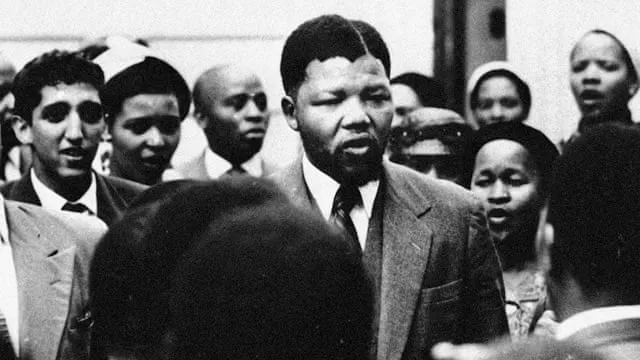
April 20, 1964. Nelson Mandela stood in a Pretoria courtroom, facing charges that could get him hanged. He’d already been in prison for nearly two years. Now the apartheid government had him where they wanted him — on trial for sabotage and conspiracy to overthrow the state, alongside seven co-accused. A death sentence was not just possible. Most people in that courtroom expected it.
His lawyers had one request: please, take out the last line.
Mandela had spent two weeks drafting his statement in his prison cell. It was the speech he’d deliver from the dock — not as a witness, which would have exposed him to cross-examination, but as a man choosing to speak for himself on his own terms. The final words were: “It is an ideal for which I am prepared to die.” His defence team was worried it would read as a provocation. They begged him to soften it. He refused.
As he later wrote, he felt they were likely to hang regardless of what he said — so he might as well say what he truly believed.
For three hours, the courtroom listened. He didn’t deny the charges. He explained them. He laid out why the ANC had turned to sabotage after decades of peaceful resistance had been met with increasing repression. He spoke about poverty, about malnutrition, about what apartheid actually looked like in people’s daily lives. And then, at the end, he looked Judge Quartus de Wet directly in the eye and delivered that final sentence.
Denis Goldberg, one of his co-accused, remembered what followed: “There was dead silence. Nobody said anything. Even the judge didn’t know what to say.”
The court adjourned for lunch. Mandela told a warder he expected to be hanged.
On June 12, 1964, the judge sentenced him to life imprisonment instead. Mandela later believed that by daring the judge to impose the death penalty, he had made it harder for him to do it.
He served 27 years on Robben Island. When he walked free in February 1990, one of the first things he did was quote the last line of that speech to the waiting press.
The “prepared to die” line is now etched into the wall of South Africa’s Constitutional Court. But the moment that made it possible was the quieter one — the moment Mandela told his lawyers no.
He kept the line because it was true. And in that courtroom, saying something true meant accepting whatever came next — even the rope. He’d chosen integrity over survival, and within weeks he was on a boat to Robben Island, where he’d spend the next 27 years living with the consequences of that choice.